Tuesday, 30 June 2020

Deciding What to Read
I am a slow reader and my TBR pile is getting 'higher'! I'm sure there are a lot of you like me and you are not really making inroads into the pile before you're attracted to yet another title. I started to think about what prompts me to buy a book. Those of you who know me will say it's a striking cover design, an intriguing title and unanswered questions in the blurb maybe. Yes, it's all of those things but what else? Looking at the list of what I'm hoping to read next on my Kindle, I've tried to categorise my choices to show the range of novels I found there.

Genre - I enjoy historical novels and family sagas. As well as meeting strong characters, who often have battles of their own to face, I learn about what it was like to live during those times and how society has changed. Here are two I can't wait to read:
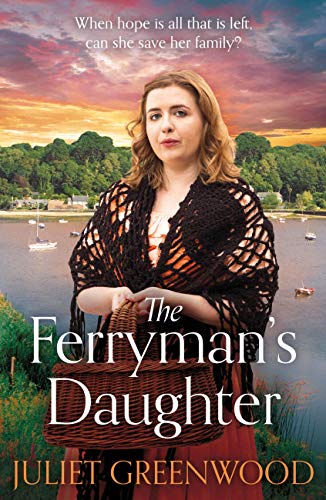
- Set in 1908, The Ferryman's Daughter by Juliet Greenwood has been described as a gripping new saga of strength, family and hope. I had the pleasure of welcoming Juliet onto my blog on May 25th where you will find out more about her and her novel.
Heartbreak in the Valleys by Francesca Capaldi. It is set in the Welsh valleys in 1915 during World War 1.


Recommendations - Over lockdown, I have 'attended' a number of virtual Society of Author events as well as those at the wonderful Hay Digital Festival. One book that I definitely wanted to read was Maggie O'Farrell's Hamnet after hearing her interviews and reading such good things about the novel. It is inspired by Shakespeare's son of the same name who died. The story of the bond between twins and the grief that pushes a marriage to its limit, the author reimagines the life of a boy whose name was given to one of the most famous of plays, Hamlet.

Crime - I enjoy reading crime novels and next week I welcome fellow Ruby Fiction author, Claire Sheldon onto my blog. Her debut novel, Perfect Lie, is already receiving lots of 5* reviews. However, what attracted me to the novel was this in the blurb - the main character, Jen, has started to receive strange gifts in the post ... first flowers, then a sympathy card. It could just be a joke...But then the final gift arrives, and Jen has to question why somebody is so intent on shattering her life into pieces... My imagination is going into overdrive and I'm looking forward to finding out what's going on to this person who is striving to be the 'wife and mother of the year'.


Authors I know - Today is the publication day for my good friend, Sue McDonagh's third novel in the art cafe series, Escape to the Art Cafe. Set on the beautiful Gower peninsular, I know I will be in for an entertaining escapist read. I thoroughly enjoyed her first two books and like them, I understand this one may be read as a standalone. However, I'm looking forward to meeting up with some of the characters from those earlier books, too. I'm sure that as well as the humour and romance in the novel that I'm bound to find in Sue's writing, she will be discussing serious issues, too.  


Sequels and books by authors whose novels I've enjoyed before - Three books stand out on my list: 
Angela Petch's novel The Tuscan Girl. I chose this after enjoying her wonderful WW2 story, The Tuscan Secret 
Endless Skies by Jane Cable. I love the way Jane's stories look back to the past and know this is a book for me.
The Runes of Destiny is due out in December and is Christina Courtenay's sequel to Echoes of the Runes. Her timeslip novel was excellent and I can't wait to continue with the story.

I have read so many amazing books recently and maybe that is for another post but I hope you've enjoyed a peek at what is waiting for me to read over the next month or so.  
Why not pop a recommended title of a book you've enjoyed in the comments? Thank you.

You may also follow me on Twitter @JanBaynham and on my Jan Baynham Writer page.  

Thursday, 18 June 2020

Eight Weeks On
It is eight weeks since my debut novel, 'Her Mother's Secret', was published and I've been reflecting on what has happened since. I wasn't expecting the book to have been received the way it has and I'm very grateful for all the wonderful messages and reviews. If it has helped people escape the awful situation in which we find ourselves, I'm more than happy. It's brought back memories of holidays spent on Greek islands for many. There are now forty two reviews on Amazon. Some are duplicated on Goodreads but many on there are different ones, too. A big thank you to those of you who have taken the time to write them. 

Appearing on a large number of blogs has been amazing, every one having been offered by generous members of the writing community. They were all so different. Some asked my to write a piece on a particular topic, for example, the inspiration for my novel -

'At the time, I'd been reading a novel where the rustling in the trees sounded like whispers and inanimate statues took the form of the ghosts of people they represented. combining both ideas, I asked myself what if the whispering could show the presence of a past family member. Always fascinated by family secrets and the bond between mothers and daughters, I knew I had the basis for a story.'

Others wanted to know about the setting - 

'Having visited many times and being struck by the wonderful palette of colours seen in every landscape, Greece was my choice of background. The island is not based on one particular place but is an amalgam of areas I've visited. Every holiday has contributed to the whole backdrop where I've tried to show the climate, the vivid colours of the sea and the flowers as well as the warmth of its people.'

Another asked me to reflect on my writing journey and how it felt to get published in the end -
 ...becoming a published author ... was both exciting and nerve wracking, but I did it! My advice to anyone reading this is never give up. It's never too late!

Some were question and answer interviews where I loved the variety of the questions. Another blog post was in the form of sharing opening lines and others reviewed the book. Thank you all for getting my name out there. 

In the same way, I hope that welcoming a number of authors onto my blog in my series of 'Firsts' in May and June has had a similar effect for them. Two writers, Juliette Lawson and Kirsten Hesketh, were debut authors and Juliet Greenwood talked about her first novel with a new publisher. The comments on my blog tend to be from just a few loyal followers but stats show that the posts are read world wide. I look forward to sharing more guest posts with you in July.

Virtual meetings have become the norm. As co-organiser of the newly named Cariad Chapter of the RNA, we now meet via Zoom and it's been good to include our members from Norway, Cornwall and Bristol, too. Our June meeting was a virtual mini-writing workshop with author, Jenny Kane. Great fun, it made up for having to cancel the writing day we'd booked with her due to lockdown.


Since publication day, I have also taken part in my publisher's Choc Lit and Ruby Virtual Book Festival. It ran over two weeks and I shared a day with the lovely writer, Marie Laval. A wide variety of events took place with readings, videos and give-aways.I ran two competitions - one was to choose an actor to play Stelios from 'Her Mother's Secret' and the other was to tell me the name of the underground lake in Kefalonia that inspired my short story, 'The Phantom Boatman' last year.


Last week, 'Her Mother's Secret' came out in audio. At first, it felt strange to hear the voices of my characters who had lived in my head for so long. Read for Isis Audio Soundings by Deryn Edwards, I am delighted with it. What has made it particularly worthwhile for me was to receive an email from a partially sighted reader who had been frustrated that she couldn't read the e-book but had just finished listening to it and wanted me to know how much she'd enjoyed the story. 

I've joined an on-line writing course that meets fortnightly. Taught by the amazing Jenny Kane, it already seems to be just what I need. Above all, it will give me the opportunity to write outside my comfort zone and experiment with different genres. I hadn't written a short story for a while apart from some Flash Fiction pieces and it felt good to submit one for a critique from Jenny yesterday. I have also booked a workshop on Conflict with Alison May at the end of the month.

So that's it. Eight weeks of being a published author. I'm a bit sad as I'm regularly checking the Amazon rankings to see how my 'baby' is doing. For two whole days in May, it was #1 Amazon Hot Release in Greek Travel. Because this will not happen again, I had to screen shot it! I told you I was sad. It has now settled at #7 - #8 in the Greek Travel Best Sellers. Do you do this?

Thank you for reading. How did you feel in the weeks after your first ever novel was published? I'd love to read your comments. Thanks.

You may also follow me on Twitter @JanBaynham and on my Jan Baynham Writer Facebook page.

Monday, 1 June 2020


MY INSPIRATION FOR 'A PARIS FAIRY TALE'
I'm delighted to welcome author, Marie Laval, to the blog today. We share the same publisher, Choc Lit and Ruby Fiction, and I first met Marie at the RNA York Tea last September. During the recent Choc Lit and Ruby Virtual Book Festival we shared a day and exchanged pieces about the inspiration for our novels.

Over to you, Marie!
It takes me so long to write a novel that I can’t always recall what gave me the original idea for a story. I can however remember exactly where and when 'A PARIS FAIRY TALE' was born in my imagination. I had gone shopping in Manchester with my daughter Clémence and we sheltered from the rain in the beautiful John Ryland’s Library on Deansgate in the city centre. After walking around the impressive, atmospheric building, I sat in front of a computer and played around with an interactive programme describing the history of illuminated manuscripts in medieval Paris. I was particularly fascinated by the work of Jean Rémiet, an illuminator also known as ‘the master of death’ for the way he portrayed death and illness – I know, not very cheerful! From that moment on, I was hooked… It took two years to finish the story!

If it hadn’t been for the rain, I would never have ventured inside the library that particular day and got involved in the interactive display. And if hadn’t been for my daughter standing patiently next to me for over an hour whilst I took frantic notes and muttered to myself like a mad woman, 'A PARIS FAIRY TALE' might never have existed! 

Blurb for A PARIS FAIRY TALE
Is Paris the city of happily ever afters?
Workaholic art historian Aurora Black doesn’t have time for fairy tales or Prince Charmings, even in the most romantic city in the world. She has recently been hired by a Parisian auction house for a job that could make or break her career. Unfortunately, daredevil journalist Cédric Castel seems intent on disrupting Aurora’s routine.
As Aurora and Cédric embark on a journey across France, they get more than

they bargained for as they find themselves battling rogue antiques dealers and personal demons, not to mention a growing attraction to each other.
But with the help of a fairy godmother or two, could they both find their happily ever afters? 

AUTHOR BIO
Originally from Lyon in France, Marie now lives in Lancashire with her family. She works full-time as a modern languages teacher and in her spare time she loves writing romance and dreaming about romantic heroes.
She writes both historical and contemporary romance. Her historical romance The Lion’s Embrace won the Gold Medal at the Global Ebook Awards 2015 (category Historical Romance), and best-selling Little Pink Taxi was her debut romantic comedy novel with Choc Lit.
She is a member of the Romantic Novelists Association and the Society of Authors. Her native France, as well as her passion for history and research, very much influences her writing, and all her novels have what she likes to call ‘a French twist’!
A PARIS FAIRY TALE is available as an ebook and an audio book from Amazon
You can find out more about Marie on:
Facebook - https://www.facebook.com/marielavalauthor/
Twitter - https://twitter.com/MarieLaval1
You can also find on Pinterest the many beautiful photos of Paris and illuminated manuscripts which inspired the writing of A Paris Fairy Tale https://www.pinterest.co.uk/laval0232/

Thank you, Marie. Set in my favourite city, I love the sound of your novel and it's already on my Kindle, moving to the top of my TBR pile.  

Thank you for reading. You may also follow me on @JanBaynham and on my Jan Baynham Writer Facebook page.

Monday, 25 May 2020

Guest Interview with Juliet Greenwood
Today I'm delighted to welcome Juliet Greenwood to the blog in my series of 'Firsts'. I'm a big fan of Juliet's writing, having enjoyed her previous three books, but her first novel with Orion, 'The Ferryman's Daughter', has just been published.

Juliet, welcome! Please tell us a little about yourself and your writing.
'The Ferryman’s Daughter' is my first book for Orion and is a total dream come true. I'm still pinching myself. I’ve always had a passion to be a writer, but like many authors, it’s been a long road with many digressions (mainly to do with making a living!) in between. I started my writing career with stories and then serials in magazines, before three historical novels published by Honno, a small press based in Wales. I’ve lived and worked in many different places, including London, but now live in a traditional quarryman’s cottage on the edges of a village on a mountain slope in Snowdonia. I love my garden, which is surrounded by the stone walls of sheep fields and is where the quarryman’s family would have grown food to supplement a subsistence wage. I’m doing my best to follow their example, including a small polytunnel where I have a cutting from the Hampton Court vine that produces delicious grapes.

What was the inspiration for ‘The Ferryman’s Daughter’?
The original inspiration was the story of Rosa Lewis, born a little earlier than my heroine, in 1867, who rose from being a domestic servant to become a renowned cook, including for royalty, and eventually owning The Cavendish Hotel in London. She was the real-life inspiration for the popular 1970s drama series ‘The Duchess of Duke Street’ and was a wonderful character, who defied expectations of what women were capable of, to become a success in her own right.

Set in 1908, how much research did you have to do? How did you set about it?
Because two of my previous novels have been set in the early part of the twentieth century, including during the First World War, I’d already done quite a bit of research. It’s a time I find fascinating because it was when so much was changing in society, particularly for women, who had been fighting for decades for the right to education and control over their earnings and their lives. I do much of my research through books and online, but I also love learning about the everyday part of ordinary lives in the past by visiting places like the squatter’s cottage in Blists Hill in Ironbridge, which gives an idea of how our ancestors lived their lives, from the kitchen range to the pantry and the sparse sleeping arrangements. I love St Ives, but I only knew a little of the history, so I enjoyed learning more about its past and its transformation from fishing village into hub for artists and tourism it is today.

I read that you write about 'determined young women fighting to make their own futures against the odds'. Can you tell us about Hester's character in your new novel?
I love Hester. All my heroines are independent and determined, but Hester takes it to a whole new level. Most of my heroines have to overcome some level of poverty to make their way in the world, but Hester has been born into a family on the edges of destitution, always one week’s missed rent away from the workhouse and a dad with a tendency to put his need for a pint with the lads in front of keeping the family together. Hester sets out to make her own money, so she can take control of her life and look after her younger siblings, overcoming every setback, including panic buying of sugar as the First World War breaks out that threatens to destroy her fledgling business.

Hester is astute enough to realise the only way she can break free from the life of endless, mindless drudgery she is expected to follow is to learn a skill, so she sets about it. She’s always being dragged back as, like so many just making ends meet, however hard she works and saves, there’s always some family crisis that sends her back to the beginning. But each time she picks herself up, dusts herself down, and starts all over again. What I also love about her is that she might have had the minimum of education, but she’s nobody’s fool. She’s quite capable of standing up for herself, especially when she takes over the rowing of the family’s ferry and has to deal with drunks and wandering hands, using her wits (and the odd reminder than they can swim the rest of the way if they prefer) to keep herself safe. And when it comes to love, she’s determined to follow her heart, however impossible it might seem, rather than settle for (the decidedly creepy) young man her father has chosen for her, mainly for the convenience of free pints down the local. I will always love Hester for her loyalty and her fierceness and her absolute determination never to settle for second best and always be her own woman, despite living in a world in which women weren’t expected to be anything at all. Go, Hester!

You live in a beautiful part of the world and I know you enjoy walking. How much planning and thinking can you do on your walks?
I think I can safely say most of it! I live a few minutes from the North Wales coast and the island of Anglesey, as well as being in the heart of the mountains of Snowdonia, so my dog walking time is also my thinking time. It’s where I work out knotty problems of the plot, or simply don’t consciously thing about it at all but let my mind roam free, and usually by the time we are back for breakfast a solution has appeared. I find
Llandwyn Beach
if I’m at home, there’s always something to distract me, but just me and the dog and the countryside, meeting fellow early morning dog walkers along the way, is when I can empty my mind of everything else and concentrate. I’m feeling incredibly lucky at the moment as, although I’m missing the sea, I have many and varied walks from my cottage.

What do you think would make a good question for a book group where ‘The Ferryman’s Daughter’ was being discussed?
What do you think Hester learns from working for Miss Chesterfield, the middle-aged, self-made businesswoman who sets up a convalescent home for recovering soldiers?

What is the best piece of advice you’ve been given as a writer?
That it takes a long time! Because we can all tell a story and can write, and usually do some creative writing at school, it seems like a natural skill. But writing a novel is anything but. The best piece of advice I was ever given was to think of learning to play a musical instrument. You wouldn’t expect to pick up a cello one week and play at the Albert Hall the next. To reach the level of skill to perform to even the smallest audience (let alone a paying one!) requires hours of practice, day after day, week after week, year after year. It’s the same with writing. Most published writers have plenty of ‘bottom drawer’ manuscripts that will never see the light of day, because they are the hours of apparently thankless, unpaid and unseen exhaustive effort in which you learn your craft. And that’s before you start working with an editor and learn to hone a whole other level of skill, just as you thought you’d mastered the thing in the first place. And, as with a musical instrument, the learning never ends. On the other hand, that’s part of the thrill, of challenging and stretching yourself. 

Nowadays, after fifteen or more years of serious bashing away, I know when I’ve finished a novel. It’s when I’ve written and rewritten it so many times, bearing in mind everything I’ve been taught and hunting down everything that doesn’t hang together and doesn’t work, that I loathe everything about it, and never want to see it again. Then I send it off to my agent and editor and a whole new round of work begins. But that’s also when I fall in love with it all over again, and the passion to get it right returns - and there’s no better feeling than when a book finally comes together!

I love your analogy comparing writing to learning a musical instrument and agree that learning never ends. Thank you, Juliet. It's been a pleasure to have you here and to learn more about you and your new novel.

 BLURB for 
The Ferryman’s Daughter
Published by Orion May 14th 2020

My first book for Orion is set on the Hayle Estuary, near St Ives in Cornwall, at the time of the Great War. It is the story of Hester, who is forced to take over the family business of rowing the ferry across the river to keep a roof over their heads. But Hester has a dream of one day becoming a professional cook and opening her own establishment in St Ives, so creating a better life for herself and her family. Even with everything against her, Hester remains determined to succeed …

 Can Hester help her family escape desperate poverty and fulfil her dreams?
1908: Hester always loved her mother best, her father had always been a hard man to like, spending more time (and money) in the local than with his family. When her mother dies suddenly Hester is placed in the position of care-giver for her younger brother and sister, only for her father to get badly injured in an accident. As the years pass it is only Hester who can keep her family afloat, now rowing the ferry night and day to keep them all from starvation, she sees her dreams of working in a kitchen and one day becoming a cook, slipping further and further away.
But just how far is Hester willing to go to make her dream a reality? And as the threat of war comes ever closer to the Cornish coast, will it bring opportunities or despair for Hester and her family?

BIO:
Juliet Greenwood has always been a bookworm and a storyteller, writing her first novel (a sweeping historical epic) at the age of ten. She is fascinated both by her Celtic heritage and the history of the women in her family, with her great-grandmother having supported her family by nail making in Lye, in the Black Country, near Birmingham in the UK, and her grandmother by working as a cook in a large country house.
Before being published by Orion, Juliet wrote three historical novels for Honno, the Welsh Women’s Press, reaching #4 and #5 in the UK kindle store.
Juliet lives in a traditional quarryman’s cottage between the mountains and the sea in beautiful Snowdonia, in Wales in the UK, and is to be found dog walking in all weathers, always with a camera to hand…

Social media links:

                                                         
Twitter            https://twitter.com/julietgreenwood

The Ferryman’s Daughter:


Thank you for reading. I hope you enjoyed reading about Juliet and her first novel for Orion. You may follow me on Twitter @JanBaynham and on my Jan Baynham Writer Facebook page.

Sunday, 17 May 2020

Guest Interview with Kirsten Hesketh
The second guest interview in my series of 'Firsts', I'm very pleased to welcome debut novelist, Kirsten Hesketh, to talk about her novel, About Us. I got to know Kirsten when we shared a flat at the 2017 RNA Conference in Harper Adams, Telford.

Kirsten, welcome! It's good to meet up again. Please introduce yourself and tell us a little about your writing.
Hello Jan. Thank you so much for inviting me onto your lovely blog. My name’s Kirsten Hesketh and I’m a writer (it still seems strange to write that!) My debut novel, Another Us, was published last Thursday by Canelo so it all seems very new and slightly unreal.

What was your inspiration for ‘Another Us’?
My son was diagnosed with mild Aspergers when he was about ten. A few years later, I stumbled across a statistic which claimed that eight out of ten marriages with a child on the spectrum ended before the child was sixteen. Whilst that didn’t reflect our experience at all – or those of families we knew in the same situation – I did wonder how I might have reacted if I’d known about the statistic several years before. And so the idea behind Another Us was born …

On your website, you tell us that your son’s request was that your ASD character is neither a hero nor a victim. How did you go about achieving that?
I’m not sure I have to be honest! I mean, the little boy with Aspergers in the book – Jack - is not the main character and nor is he an obvious victim, but I’m sure there are elements of both in him, as there are in all of us. I kind of wanted Jack to be a constant – sailing on and doing his thing – whilst, around him, other people are changing. He’s a catalyst, I suppose.

Can you sum up your novel in a few sentences?
I hope it’s a funny, poignant and compassionate story about love, family and Aspergers as we follow Jack’s mother, Emma, on a journey of self-discovery after his diagnosis.

Perhaps, you’d like to tell us how you got the book published.
I went a very traditional route. I submitted my book to agents, got signed by the fabulous Felicity Trew who, in turn, sold the book on to Canelo. Of course, that makes it sound very easy, which it wasn’t at all; there was rejection a-plenty and lots of twists and turns along the way.

Which came first the characters or the story you wanted to tell?
It’s interesting this one. At first, I thought the two had arrived together, fully formed. I wrote the first draft and realised that I wasn’t at all sure what story I was trying to tell. Was it a story about a marriage at breaking point? Playground politics? Parenting an ASD child? A journey of self-discovery? Whilst there are elements of all these in the book, I needed to sit back and think about what was main story I wanted to tell and then start rewriting. Only then did it all start to come together into a coherent whole (I hope!)

How much planning did you do for the novel?

Ha! None. For the first draft at least. I just ploughed in and started writing and about two thirds of the way through, I ground to a sticky halt. I soldiered on to the end, and then I had to revisit everything and more or less start again. The trouble was, I had spent ages polishing and wordsmithing passages in the first draft that didn’t make the final cut. I won’t make that mistake again!

I know you have an agent. How important is your relationship with her?
I do. I know lots of people have incredibly successful writing careers without being represented, but I love being signed to Felicity. As well as opening doors that I simply couldn’t open on my own, she is also advocate, editor, co-conspirator and – on occasion – therapist! I wouldn’t be where I was without her.

In these unprecedented times, can you tell us how you’ve been able to prepare yourself for publication day? Have you altered your plans for a celebration?
It is a very weird time, isn’t it? But, being a debut writer, I haven’t got anything to compare the build up to publication and the launch to. So, for me, it is just how it is. I did have plans for a little tea party launch in a swanky London hotel and I had to pull the plug on that several months ago – but, apart from that, not much has changed. And the little launch Zoom party I held instead – and which you were kind enough to come along to last Thursday – was fabulous! Overall, I think it is more difficult for my agent and publishers who are suddenly working from home. I always work from home!
Zoom Launch Party for Another Us
What is the best piece of advice you’d like to give to a new writer?
Well, I could give advice, but I think most of us learn the hard way, don’t we? But learn your craft. Surround yourself with like-minded people – writers are the friendliest and most supportive bunch I’ve ever met.  Persevere. Persevere. Persevere. And try not to take rejection seriously! It’s just the name of the game! Oh, and learn to ignore bad reviews!  I’ve just had my first scathing 1* and it’s haaaaard …

Thank you very much for having me on your blog, Jan. I’ve really enjoyed answering your questions.

It's been a pleasure finding out more about you as a writer, Kirsten. I wish you much success with your novel. Thursday was another 'First' in itself for me. Attending my first Zoom Book Launch and it went so well for you, too. There were more screens than the one above. Congratulations! 

Links to find out more about Kirsten and her book:

Amazon UK - https://www.amazon.co.uk/Another-Us-uplifting-emotional-family-ebook/dp/B084ZFYT2B/

Twitter - @Kirsten_Hesketh

Facebook Author page - Kirsten Hesketh - author page

Website - https://kirstenhesketh.com/

Thank you for reading. If you're a writer and had/have a book being published during lockdown, how did/are going to celebrate its launch? I'd love to hear your story. Thanks.

You may also follow me on Twitter @JanBaynham and on my Jan Baynham Writer Facebook page.

Sunday, 10 May 2020


Guest Interview with Juliette Lawson
Today I'm delighted to be joined on the blog by debut historical author, Juliette Lawson, whose novel 'A Borrowed Past' was published in February this year.

Please introduce yourself, Juliette, and tell us what you write. 
Hello, and thank you for the opportunity to join you on your blog, Jan. I have been an avid reader all my life, but I reached my 50s before attempting to write a novel myself. With a busy career as an accountant in education and a husband and three children, there wasn’t the space for it. Then I became a freelance consultant and finally made time to wrestle an abandoned manuscript into some sort of order!

My Classics degree and my love of local history and family history were big influences in choosing historical fiction, besides it being one of my favourite genres to read. I have dabbled in contemporary fiction, but the saga genre kept pulling me back. I love the idea of bringing the past to life through stories, especially portraying my local community in days gone by.

Juliette Lawson is your pen name. Why did you feel you needed a different name and how did you settle on the one you chose?
I had already written three nonfiction books on finance and funding for school leaders, and I didn’t want to confuse those readers by publishing fiction under the same name. I also felt my real name, Julie Cordiner, didn’t sound quite right for a historical saga author.

Oh, how I agonised over the pen name; it’s hard when you have a virtually free choice. In the end, I decided that if I ever did an event, I’d be more likely to respond to a name that wasn’t too different, so I simply lengthened Julie to Juliette! The surname Lawson is a tribute to my grandmother.

I’m full of admiration for the fact you have self-published ‘A Borrowed Past’. What was that process like?
It’s been hugely satisfying. I had already indie published my nonfiction, where timeliness is important, so it was an easy decision to follow suit for my fiction. Besides, I like to be in control! Today there are lots of tools that make the process much easier than it used to be.

As the book took shape, I had an early manuscript assessment then a developmental edit (from two separate editors). I’m a copy editor for indie authors, so I was able to do that stage myself, although I became quite paranoid about missing anything! A professional cover designer was essential.

I have spent a lot of time learning the professional approach, through online courses and following blogs and podcasts by successful indie authors like Joanna Penn, Mark Dawson, Orna Ross and Adam Croft. I’m also a member of the Alliance of Independent Authors (ALLI), which gives brilliant advice. The indie author community is incredibly supportive, and I’ve made a lot of friends.

The cover of your novel is very atmospheric and together with its intriguing title, a potential reader is drawn to delve inside. Please can you describe what to expect by summing up your story in a few sentences.
Thank you, Jan; I absolutely adore the cover. Jane Dixon Smith is such a talented designer, and she instinctively understood what I wanted the cover to convey.

It’s a heart-warming story about a young aspiring artist, William Harper, who overhears a family secret and runs away to search for the truth about his past. Despite a host of setbacks, he makes some progress, but then a tragedy happens and a whole new set of lies unravels. Can he make the right choice in love and decide where he belongs?

I’ll let some review extracts give more of a flavour:
‘An engrossing and fulfilling story with a wonderful sense of place.’
‘Lovely story with a few twists and great sense of the history of the time.’
‘The combination of strong characterisation, vivid scene setting, and convincing motives for all the characters made this a compelling read that I truly didn't want to end.’


Your novel is set in the years between 1875 and 1883. How much research did you do? Is your main character, William Harper, based on a real person? 
Inside the church for Harvest 1888
In 2012, I wrote a parish history to raise funds for my church’s restoration. Most of the research was from the Victorian era, so a lot of it was already in my head. It included some old photographs, such as the interior of the church at Harvest time, which features in my first chapter. I was also lucky in having copies of diaries written by my husband’s great-grandfather, which gave a vivid picture of the village and the community in the 1860s and 1870s. William is completely made up, from a lot of ‘what if…’ thinking.

What was the inspiration for your novel?
Firstly, I’d say it was the sense of belonging within the Seaton Carew village community that emerged as I did the research for my parish history. All William really wants is to belong. It also provided rich material I could use, such as our ancestor’s aunt keeping a chest of cleaned and mended clothes for shipwrecked sailors. The villagers sent wreaths and attended the funerals of unknown seafarers whose bodies were washed up on the beach and who had no one to grieve for them. A shipwreck from the past is an important part of my story.

Another source of inspiration was a couple who lived in a house on The Green with their 14 children. A descendant gave me transcripts of letters sent by the wife to her husband when he was working on the Continent (as they called Europe then). Her writing is so evocative, detailing her daily life and what the children were getting up to. I uncovered a secret in the father’s family history, which sparked a totally different idea that I could use as a twist in my story.

A Borrowed Past’ is the first part in the Seaton Carew Sagas series. How much planning have you done for the subsequent novels?
As I was writing ‘A Borrowed Past’, I developed a strong sense that Grace was willing me to make her the lead character in the next book, so I’ve been mulling it over for a while. Although I should have been editing ‘A Borrowed Past’ during November, I couldn’t resist sketching a story outline and writing a rough draft of book two for NaNoWriMo (National Novel Writing Month). I produced 51,000 words and I’m returning to it later this month. All I’ll say is it involves smuggling and a romantic dilemma for Grace!

I have a couple of ideas for book three but won’t decide between them yet. I prefer to finish the previous book before I commit to the story idea for the next one, as you never know what will occur to you as you’re editing. My intention for each new novel is to pick up a character from previous books and explore their story, weaving more connections between all the villagers as I go. They’ll be standalone stories in their own right, but they will all be rooted in the village community.

I’ve signed up to your Reader Club newsletter. Can you tell us more about it and why you set it up?
 It’s great to have you in my community, Jan. As you’ll know, on signing up for the Reader
Seaton Carew Lifeboat 1888
Club, you receive the original first chapter of ‘A Borrowed Past’. Sadly, I had to delete it from the final version, in the interests of getting into William’s story more quickly. I’ve called it ‘The Lifeboat Rescue’; it involves his adventure on a lifeboat similar to the one in this photo from Seaton Carew. In my monthly newsletter, I’ll be sharing interesting snippets from my research, talking about my writing process or my progress with the next book, and giving a rundown of the books I’ve been reading.

I love the idea of being able to talk directly to readers in a more personal way than I would in a blog. It partly derives from my own enjoyment in receiving newsletters from favourite authors. I also want readers who enjoy my stories to be the first to know when the next book is coming out.

What is a typical writing day for you?
 An early start, around 6 am, although since lockdown I’ve been starting a little later. I like to have silence and get a good number of words down while my husband (who’s retired) is still in bed. After PE with Joe Wicks (a recent addition!) and a shower, I return to my desk and do around another hour’s writing. That leaves me the rest of the day to balance my fiction research, planning and marketing with my consultancy work, the writing and marketing for my nonfiction books and my new venture of online courses. I try to walk on the beach every lunchtime (two minutes’ walk away) to refresh my brain for the afternoon session.

What is the most useful piece of advice you’ve received as a writer?
To write the first draft for yourself (without stopping to do any editing) and the subsequent drafts for your reader.

But oh, how I struggle with letting the words just flow onto the page and not putting on the editing hat! Editing is my favourite stage, possibly because I’m a left-brained, logical accountant who likes figuring out solutions to problems.

What has been your proudest writing moment to date?
I think it was the day the parish history books arrived - all 9 boxes of them! Foolishly, I’d volunteered to write it without any previous experience, and to hold my very first book in my hands was such an incredible feeling. Happily, we soon broke even (phew!) and started adding to the Restoration Fund. I was keen to repeat the creative experience, and soon afterwards, I decided to challenge myself to write a novel.

A close second was a wonderful letter I received from an early reader who said ‘I have just spent the last three days reading your ‘Portrait of a Seaside Parish’ from cover to cover, and it has been one of the best reads of my life. I cannot thank you enough for the interest and pleasure I have gained from it, and I do hope it becomes a ‘sell out’!’

After spending so long writing a book without knowing whether it will hit the mark, hearing words like this means so much to an author.

LINKS:


Reading Club Newsletter: http://www.subscribepage.com/a7f7t3

Blog and website: https://juliettelawson.com


Thank you for coming onto the blog and giving us so much information about your novel, Juliette. I do hope it's a big success and you get lots of sales.

Thank you for reading. I hope you enjoyed finding out more about Juliette and her novel.

You may also follow me on Twitter @JanBaynham and on my Jan Baynham Writer  Facebook page. 

Monday, 27 April 2020

What a Week!
Tuesday 21st April 2020 will be a date I will always remember. It was the day I became a published novelist and fulfilled my dream. In my last blog, I talked about how I was counting down to publication day by posting photos and short extracts from the novel in the hope of tempting readers to want to read Elin and Alexandra's stories. If you remember, I questioned whether it was right to do this in the light of the  worry and sadness of the present situation. I will never know if I got it right but I was very encouraged by the responses on Facebook and Twitter. Lots of people enjoyed the scenes of the sea and Greek village life as they helped them escape to a different time when booking a summer holiday would have been the norm at this time of year.

One of the popular posts was this one:
'Row after row of grey-green olive trees filled the space leading down to the sea.From nowhere, a breeze sprang up. To Elin, the trees were whispering, whispering about her, whispering to her, trying to tell her something.'
Those of you who have already read 'Her Mother's Secret' will know that the whispering features in Alexandra's story, too. What the whispers represent is left up to the reader to decide.

Excited and nervous, the night before, I took a long time to get to sleep, fretting about how the story would be viewed. Up until then, it was only me, the publisher, her reading panel at Ruby Publishers and my lovely editor, along with a very small band of beta readers, who knew what Elin's secret was and what Alexandra found out on her visit to Greece. By the morning, the novel would be out there in the world. What if readers didn't take to the story?

Morning arrived. What I wasn't prepared for was the generosity and kindness of the writing community, from messages of congratulations to already finding some 4* and 5* star reviews on Amazon and Goodreads. Throughout the day, friends and family were already reading the novel and saying how much they were enjoying it so far. I was blown away. Confined to the garden, we ate our lunch outside in bright sunshine! My husband cooked an authentic moussaka from a recipe given to me by my aunt and Greek uncle, accompanied by a Greek salad. Our dessert was stewed plums and natural Greek yoghurt, reminiscent of their plum trees laden with fruit and a frequent way to end a meal when we stayed with them. We had no retsina so had a beer and imagined it to be Mythos! That evening we'd scheduled a celebratory Zoom meeting with our three grown up children and the two eldest grandsons. With flutes in hand and a bottle of bubbly, we joined the meeting only to find our daughter had also invited other family members as well as friends! Such a lovely surprise and such a fitting end to a publication day in lockdown.  

The week continued with more blog appearances, lots of messages and reviews. A huge thank you to everyone who has taken time to write them and support me. If you'd like to read more about my writing and 'Her Mother's Secret', this week I've appeared on these blogs:
Monday 20th April – Sister Scribes
https://www.frostmagazine.com/category/culture/sister-scribes/
Tuesday 21st April - Karen Mace 
http://www.booksandme.co.uk/search?q=Jan+Baynham
Thursday 23rd April - Tara Greaves
https://aftertheraincomessunshine.com/2020/04/23/a-look-behind-the-book-with-jan-baynham-2/
Friday 24th April - Carol Thomas
https://www.carol-thomas.co.uk/stories-that-will-make-you-smile-jan-baynham/
Amazon link:
https://www.amazon.co.uk/Her-Mothers-Secret-Summer-69-ebook/dp/B085CHV3VQ/

Thank you for reading. If you've had a publication day during lockdown, how did you celebrate? Maybe you have one coming up. What are your plans?
You may also follow me on Twitter @JanBaynham and on my Jan Baynham Writer Facebook page.